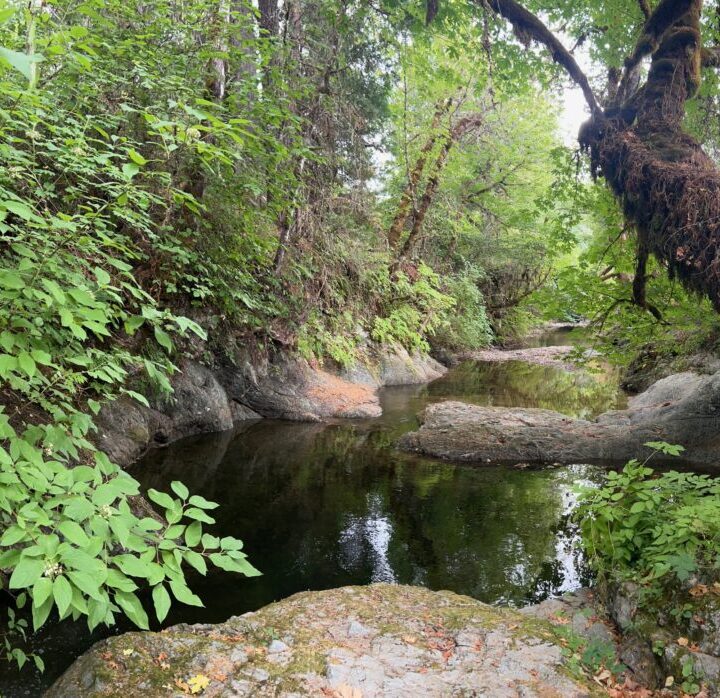
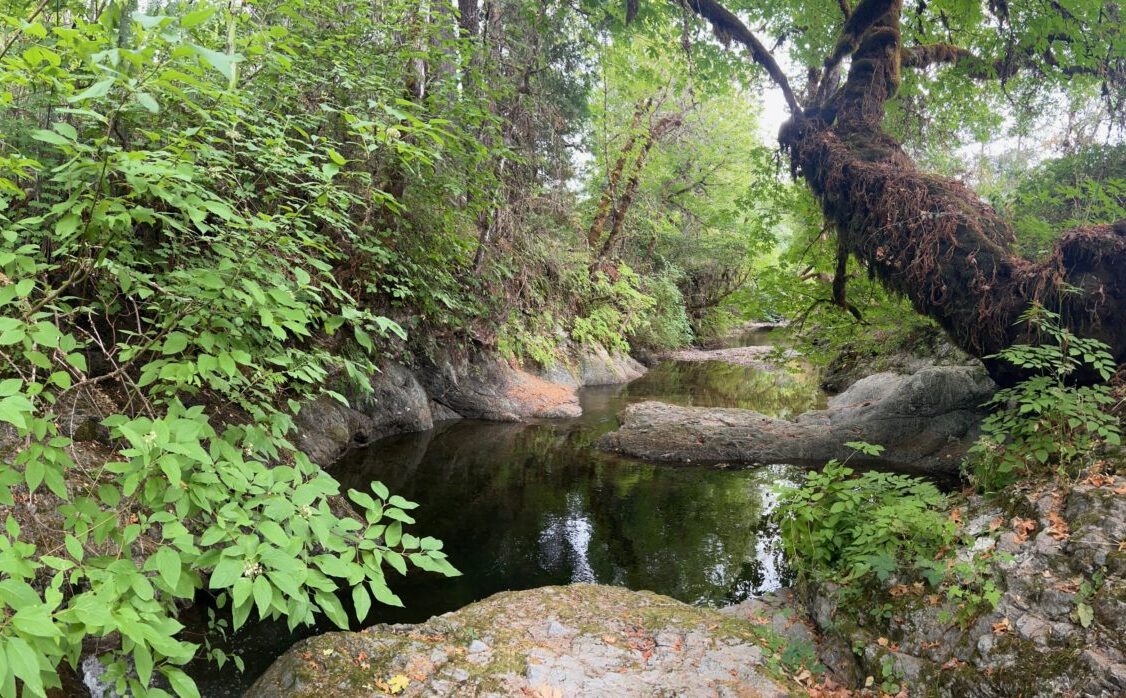
South Myrtle Creek swimming hole
Cheers to the summer, my fellow earthlings! 🌎 This is Charlotte, the Letitia Carson Legacy Project (LCLP) Coordinator with the summer edition of our seasonal newsletter. First, we’ll look back on an abundant spring full of storytelling and community building, both on the lands Letitia once stewarded and beyond. Then, we’ll look forward to a summer dedicated to making progress on important project milestones, including a new logo, an interpretive plan, and a Letitia Carson historical marker!
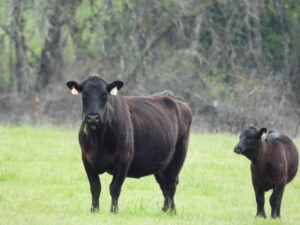
Cows on the pastures of OSU’s Soap Creek Beef Ranch, where Letitia’s cattle once grazed
As I deepen my relationship to Letitia’s story and lands, I can’t help but to imagine what moments of her life would look and feel like. I picture her walking the land, gathering plants, and tending to her beloved animals.
With a cow by her side, Letitia persisted. From the single cow she acquired along the Oregon Trail, to the three cows she was forced to buy back at the auction of the Carson estate. Letitia’s life-sustaining animal husbandry skills emphasize her role as a matriarch and birth-worker.
LOOKING BACK ~
This spring, we were buzzing with the good kind of busy, trying out new methods and refining our favorite approaches to creating meaningful experiences. Read more below for a recap of some of our spring programs and events.
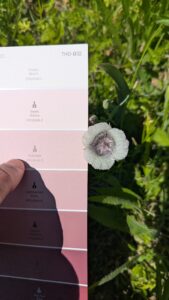
Color-matching activity with native cat’s ear (Calochortus tolmiei) flower
We connected people to place at our Spring Flora & Fauna Field Day on April 25, offering guided tours of the Carson Donation Land Claim (DLC), to help anchor the history to the location where it actually happened. Visitors helped us keep track of plants and animals spotted along the Soap Creek Memoir Path.
We marked clusters of native camas, noting areas of dense growth to return to in future seasons. While the resident elk herd didn’t make an appearance that day, we passed plenty of elk trails protected by our plant friend with firm boundaries, K’wan’-tee-tr’vt (a Native American name for poison oak).
We connected past to present at our 3rd Annual Letitia Carson Symposium on May 15.
We packed the Benton County Historical Society Corvallis Museum full of both new and familiar faces. We gathered to recognize the contributions of the historians, storytellers, and educators who helped keep Letitia’s story alive after decades of erasure. We shared an evening of nourishing food and conversations.
We heard from Hailey Brink about her research into Letitia’s role in the Douglas County community and recent updates to the Letitia Carson Digital History Collection. Luhui Whitebear spoke about the Cultivating Relationships through Camas Restoration research project, which includes the LCLP and the ancestral camas emergence along the Soap Creek Memoir Path.
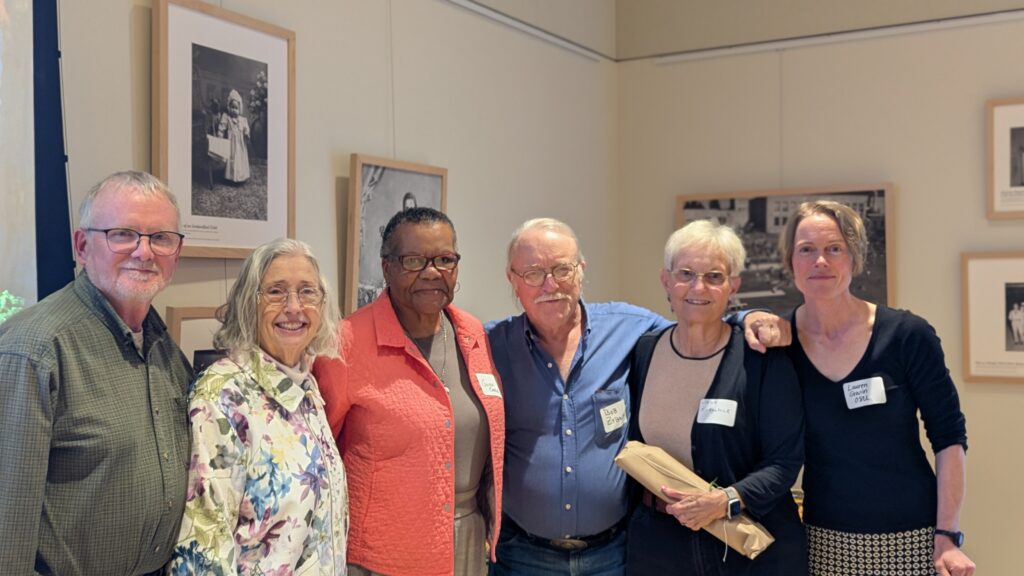
Honored Letitia Carson historians and storytellers (L to R): Larry Landis, Janet Meranda, Gwen Carr, Bob Zybach, Jane Kirkpatrick, & Lauren Gwin
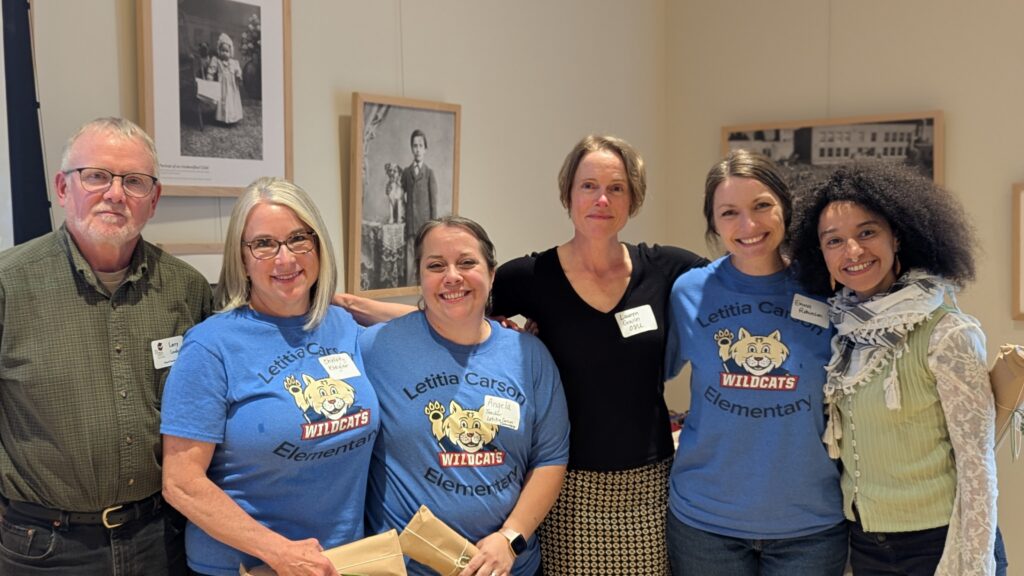
Honored Letitia Carson Elementary School 4th grade educator team with LCLP partners (L to R): Larry Landis, Christy Koegler, Angela Apple, Lauren Gwin, Emma Robinson, & Charlotte Epps
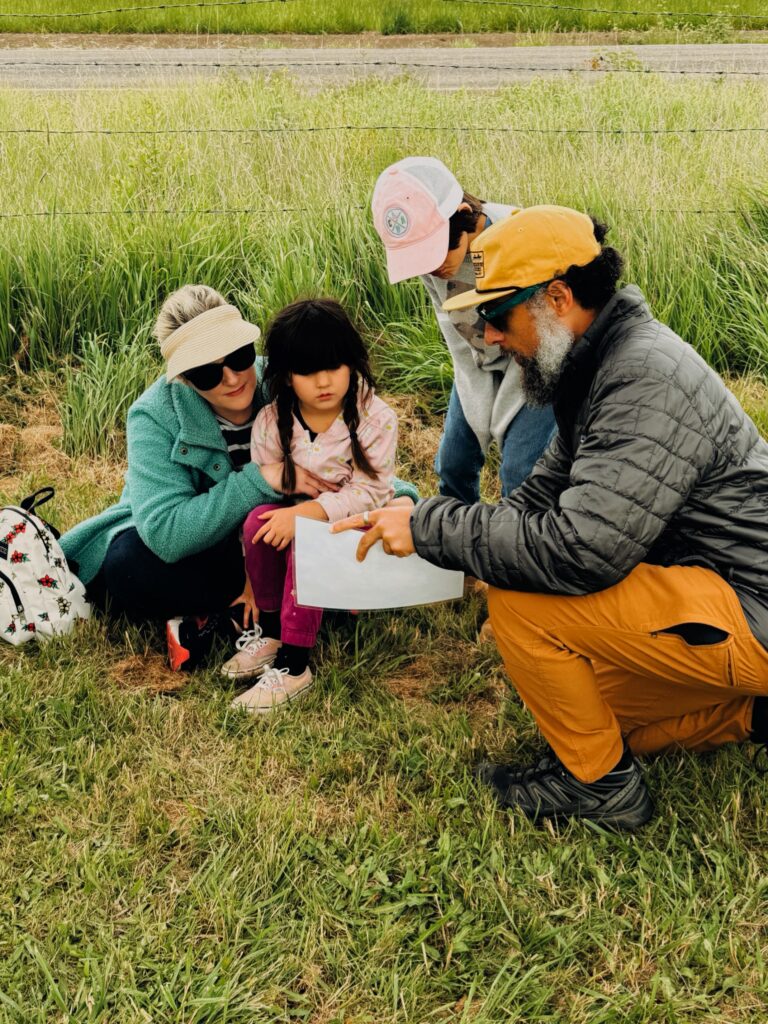
Zachary Stocks welcoming visitors to the Soap Creek Beef Ranch
Earlier that day, 25 curious people, including children and elders, joined us for a field trip to the Carson Donation Land Claim and Homestead Site. Attendees followed along the Soap Creek Memoir Path, welcomed by peak camas blooms. We shared Letitia’s story under the Elder Pear Tree and made our way to the site identified in 1850s survey notes as the location where the Carson’s dwelling stood. Folks experienced the awe-inspiring feeling of walking on the soils Letitia once tended.
You can find another event recap and more photos in this article written by our partners at Oregon State University’s College of Agricultural Sciences.
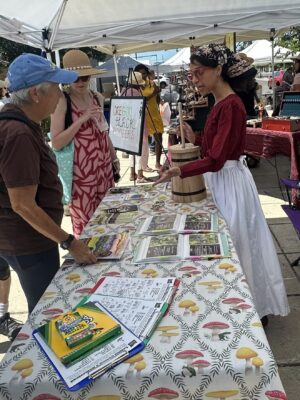
Charlotte Epps representing OBP and the LCLP at the BASE Juneteenth Celebration in Medford
We connected history with reconciliation at the Juneteenth Celebration in Medford on June 20, organized by Black Alliance & Social Empowerment (BASE).
We had a lovely time meeting fellow Oregon Black Pionerds from all over Jackson County. Yours truly made a living history debut, dressed in 19th-century period clothing. We are grateful for all the meaningful conversations shared around Letitia Carson and her impact as an iconic Black Pioneer who found freedom and a homestead of her own in Southern Oregon.
LOOKING FORWARD ~
As the sun shines and the fruit ripens, we’re directing our energy towards evaluating and enhancing our interpretive materials, programs, and offerings.
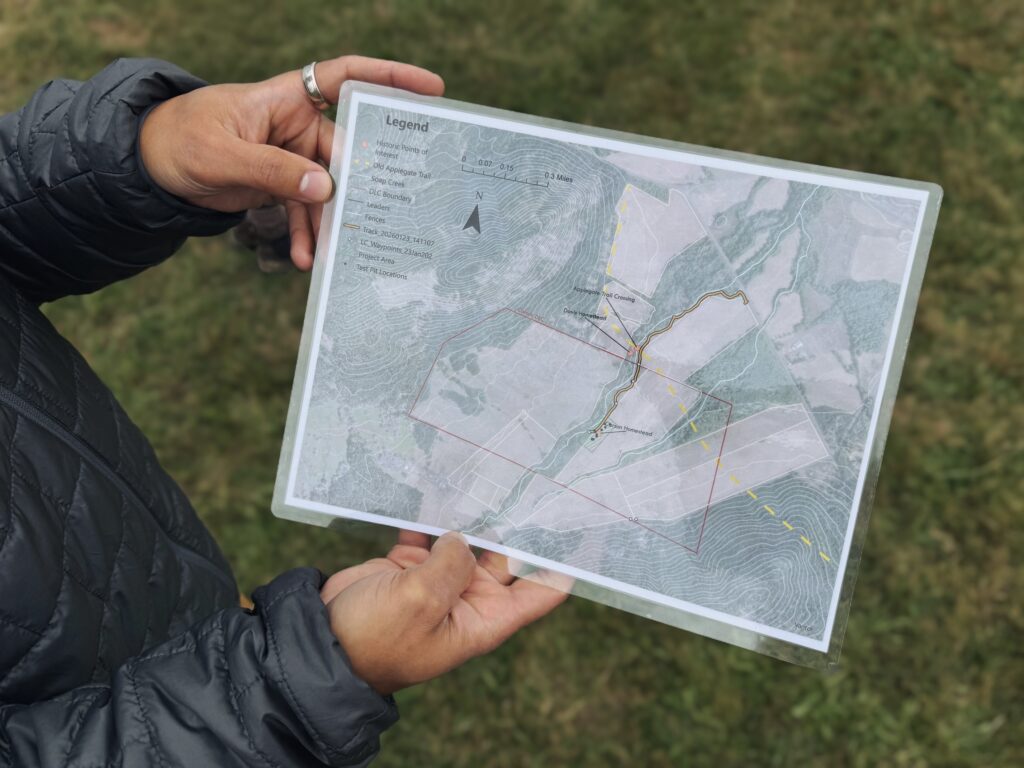
Map of the Carson Donation Land Claim, including the Soap Creek Memoir Path and Homestead Site
What is the LCLP conjuring up this Summer?
- A New LCLP Logo
We’ve entrusted graphic designer and multimedia artist, Jarren Simmons (40S Creative) to create a logo and brand identity that reflects the newest iteration of the LCLP. We gathered community feedback on Jarren’s first round concepts at the Letitia Carson Symposium and soon he’ll be back in the kitchen cooking up our final design. - Finalizing the LCLP Interpretive Plan
We’re working with Historical Research Associates to produce an official LCLP Interpretive Plan to serve as a long-term reference for how we preserve and pass along the significance of Letitia Carson’s story. Our interpretive plan will establish guiding principles for providing impactful and accessible programs for diverse audiences. The plan will inform the creation of content and materials we share on the lands Letitia once stewarded, through online spaces, and in schools and museums throughout the PNW. This includes the design and development of audiovisual materials, like exhibits, signage, and videos, as well as program content, like engaging tours and hands-on activities. We’ll use the plan as a guiding light, illuminating a path forward with careful instructions for how we carry Letitia’s legacy into the future. - Letitia Carson Historical Marker
The Oregon Travel Information Council has approved our proposal for a Letitia Carson historical marker. With a location for the marker selected and the permitting process started, our focus this summer will be drafting the text and collaborating on the design. Given the near erasure of Letitia from history, we are grateful to contribute to the important work of etching her remarkable story into the human record once again. With a historical marker in the physical environment, we move one milestone closer to Letitia Carson being a familiar household name for all Oregonians.
Improvements to project interpretation and programs, like the interpretive plan and historical marker, are being funded by a grant from the African American Cultural Heritage Action Fund of the National Trust for Historic Preservation with support from the Mellon Foundation.
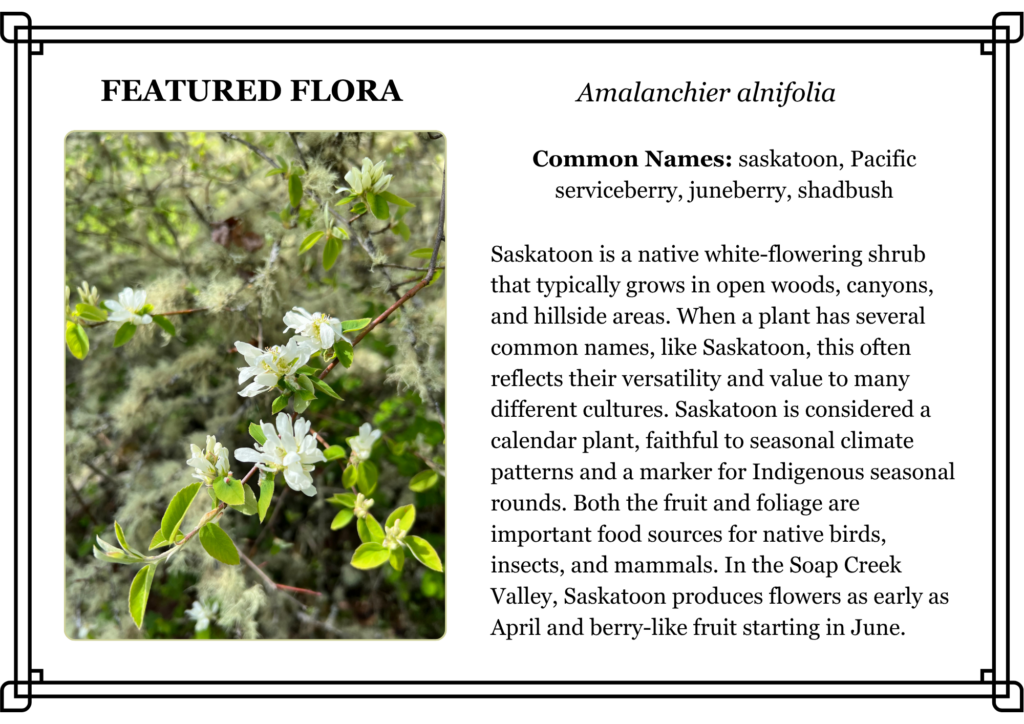
Stay tuned for more updates and offerings from the Letitia Carson Legacy Project—connecting past to present, people to place, and history to reconciliation.
With deep gratitude,

Charlotte Epps
Letitia Carson Legacy Project Coordinator