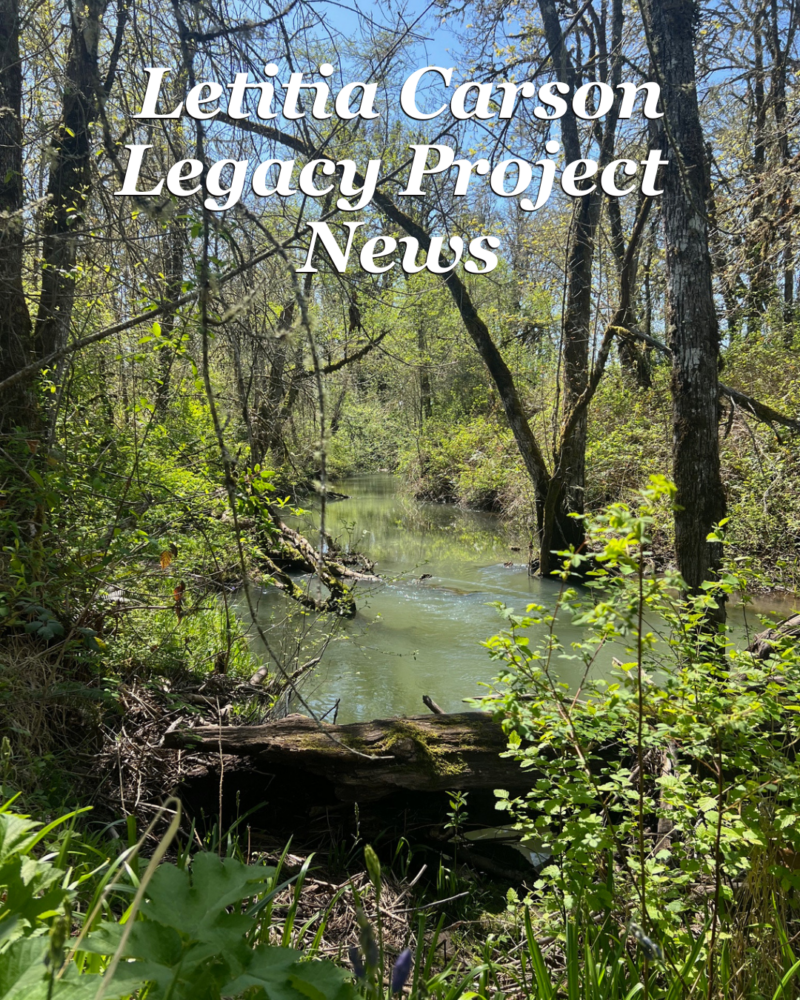
Hello, and happy Spring Equinox, my fellow earthlings! This is Charlotte Epps, the Letitia Carson Legacy Project (LCLP) Coordinator with Oregon Black Pioneers, bringing you the first ever LCLP newsletter. In this inaugural spring edition, we’ll look back at the winter season and Black History Month, and look forward to a season of in-person programming on the lands Letitia Carson once stewarded.
LOOKING BACK ~
You can look back on a year of growth and abundance by reading through our LCLP 2025 Highlights (PDF file).
What was the LCLP up to this Black History Month?
This winter, we had the opportunity to share Letitia’s story from Douglas County to Multnomah County. Here are some outstanding moments from our storytelling journeys across the state:
-
- We were warmly welcomed to share Black history with the Southern Oregon community during The Ford Family Foundation’s Alumni Dinner, at the Douglas County Museum in Roseburg, Oregon.
- Western Oregon University’s Multicultural Student Union included the LCLP as the keynote presentation for their African American Awareness Celebration in Monmouth, Oregon.
- We brought Black history to schools and classrooms, including guest lectures at St. Mary’s Academy in Portland and Oregon State University’s Ethnic Studies program.
- We sat in circle with folks from PRISMID Sanctuary, Black Oregon Land Trust, and the greater Black Ag Ecosystem in Corbett, for an evening of storytelling and communal processing through art and dialogue.
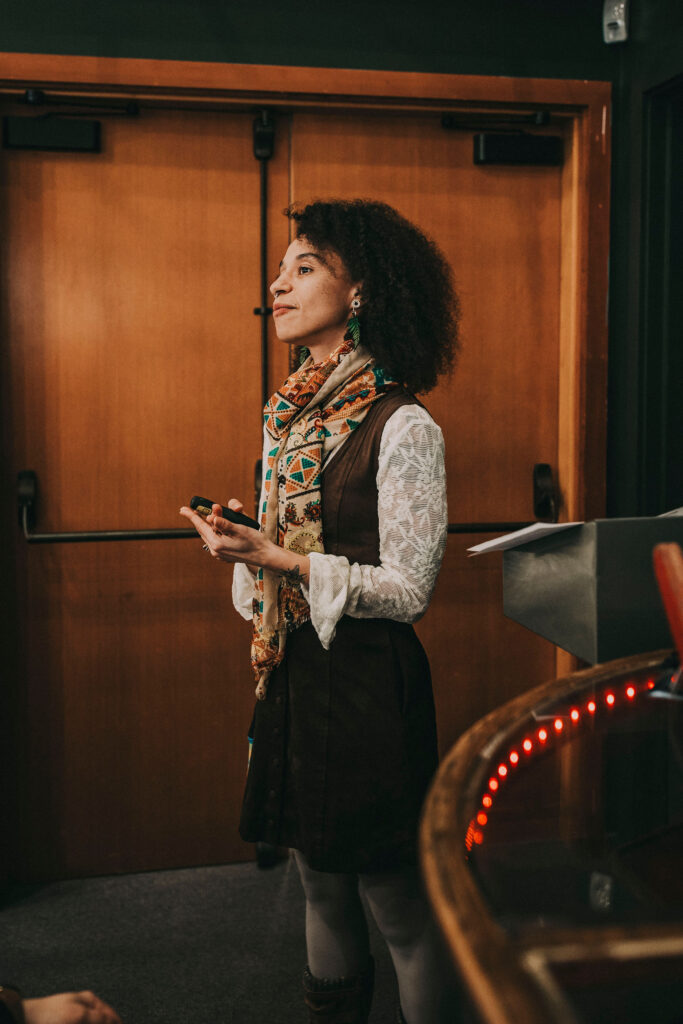
Charlotte Epps guest speaking at the Douglas County Museum for The Ford Family Foundation alumni event, courtesy of Lauren Reber Photography.
Together, we are building a network of caretakers and storytellers carrying the spirit and legacy of ancestors like Aunt Tish into our collective future.
LOOKING FORWARD ~
We’re using all the lessons and successes of 2025 to enhance our programming and overall visitor experience for the upcoming 2026 in-person tour season.
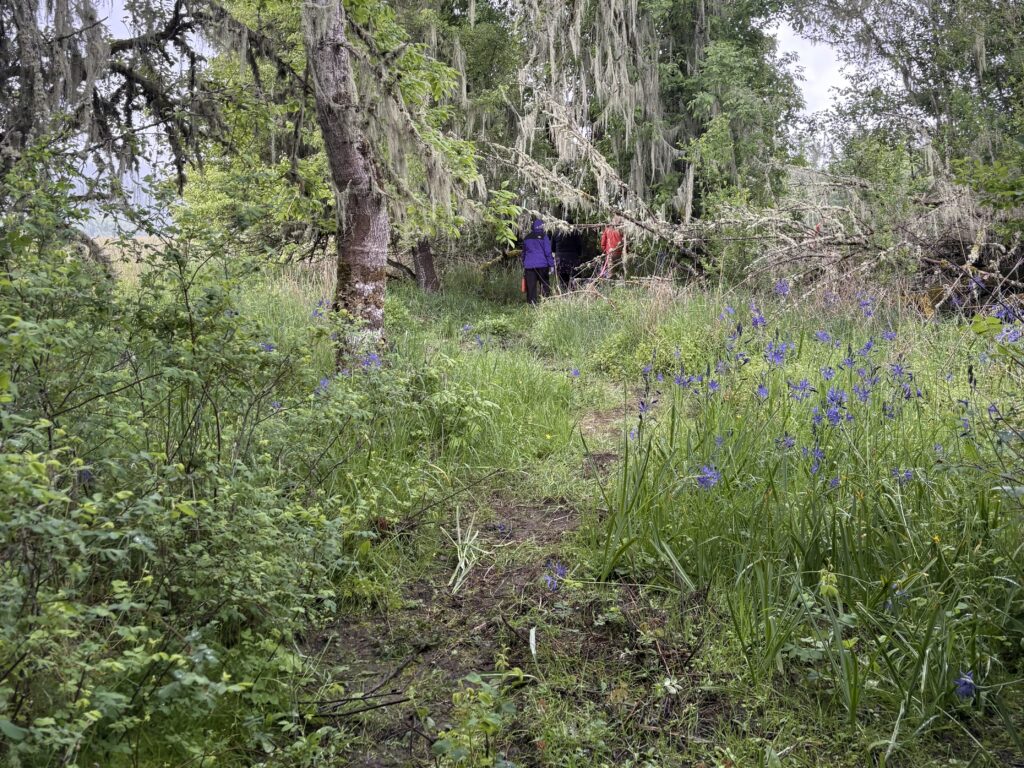
Visitors walking along the Memoir Path during the 2025 LCLP Symposium field trip, greeted by native camas and lichen-curtained trees, courtesy of Hailey Brink.
What is the LCLP conjuring up this Spring?
As the soil warms and the trees bud, we’re preparing for another season of connecting people to place. Here’s a look ahead at the public programs we’re offering this Spring:
Flora & Fauna Field Day – Saturday, April 25th
Get outside and immerse yourself in the Soap Creek Valley ecosystem, on the lands Letitia Carson once stewarded, just north of Corvallis, OR.
Help us keep track of the plants and animals we encounter along the Memoir Path that meanders along Soap Creek and leads to the Carson Donation Land Claim and Homestead Site.
Sign up for a spot on one of three guided tours offered throughout the day. Tours are 2 hours and cover just under 2 miles of walking.
This event is free of charge and advance registration is required. Find more event details and register here!
Third Annual LCLP Symposium – Friday, May 15
2:00-4:00 PM – Afternoon field trip to the Carson Donation Land Claim and Homestead Site
5:00-8:00 PM – Evening of food, conversation, and presentations at the Benton County Historical Society Corvallis Museum (https://bentoncountymuseums.org/visit/#corvallis)
Join us in celebrating the historians and educators who have kept Letitia’s story alive, and envisioning the future of the LCLP and what it means to carry Letitia’s legacy forward.
This event is free of charge and advance registration is required. Find more event details and register here!
Here comes the sun…and here comes the camas!
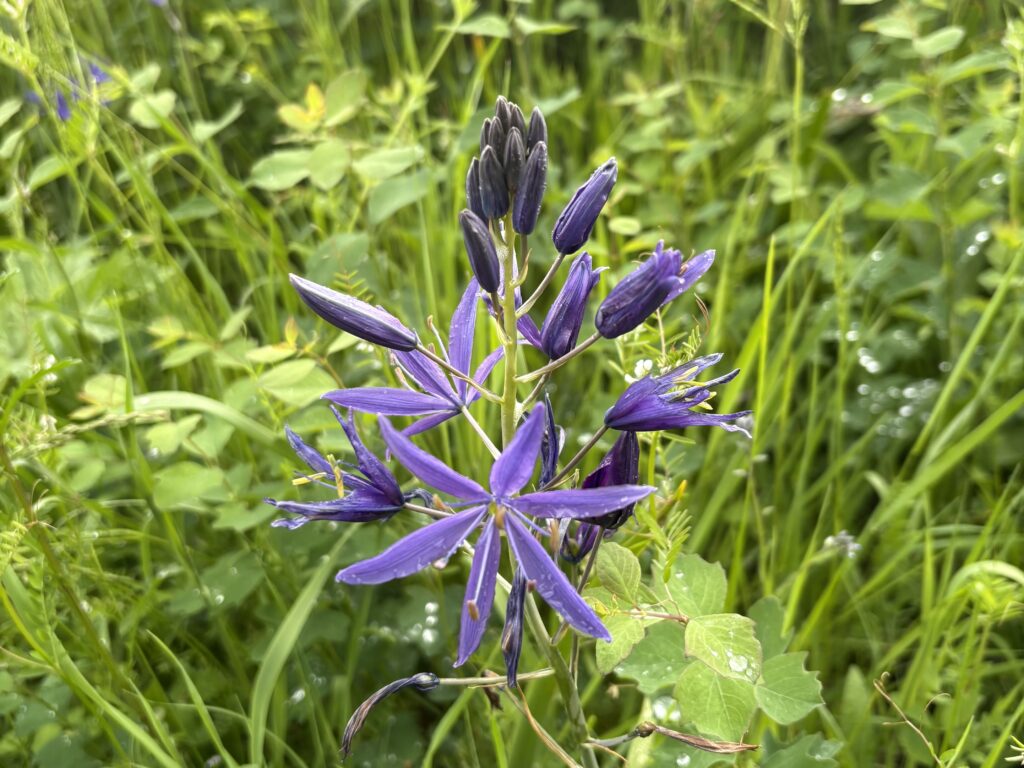
Blooming camas from May 2025, courtesy of Hailey Brink.
FEATURED FLORA
Camassia quamash, Camassia leichtlinii
Common Names: Common Camas, Great Camas
Cultural, Ecological, & Historical Significance: Camas is a native blue to white flowering perennial plant that thrives in seasonally wet meadows and prairies. Considered both a cultural and ecological keystone, camas serves as a critical resource to native pollinators and a staple of the traditional Kalapuyan diet. The bulbs are traditionally harvested with a digging stick and cooked in pit ovens, often for days at a time. In the Soap Creek Valley, camas is known to bloom from April-June.
Stay tuned for more updates and offerings from the Letitia Carson Legacy Project — connecting past to present, and people to place.
With deep gratitude,

Charlotte Epps
Letitia Carson Legacy Project Coordinator