Black History Month 2023
Oregon Black History: George P. Riley
George Riley was a Boston-born businessman and civil rights leader. He came to the West Coast after the California Gold Rush, then became part of the Black expat community in Victoria BC in 1858. After the Civil War, Riley returned to the US and resided in Portland.
In Oregon, Riley became a prominent orator. He gave lectures in Portland and Salem on Black suffrage and how Black Americans could best utilize their newly recognized freedoms. He was a member of the Zion AME Church and worked at the US Customs House in Portland from 1873-1877.
In 1869, Riley and 14 other Portlanders (13 of them Black) formed a real estate development company called the Workingmans Joint Stock Association. They purchased 20 acres of land on Seattle’s Beacon Hill, and 67 acres in Tacoma which is now the historically Black Hilltop neighborhood. In 1887, Riley moved to Tacoma, and became that city’s first Black resident.
Oregon Black History: Lyllye Reynolds-Parker
Lyllye Reynolds-Parker was born in Eugene in 1946. The Reynolds family was one of the first Black families in Eugene, and resisted housing discrimination by forming their own community on Ferry Street.
As a highschooler, Lyllye was vice president of the Eugene chapter of Student Nonviolent Coordinating Committee (SNCC). She wanted to become a lawyer, but her school counselor told her that it was not a realistic career goal. Lyllye was 40 years old when she finally decided to pursue a college degree, which she earned from University of Oregon in 1991.
In 1995 Reynolds-Parker was hired as a counselor at UO’s Multicultural Center, a job she would keep for 17 years. In that role she supported students’ career development and academic success. In 2018, Lyllye Reynolds-Parker was honored as the namesake of the UO’s new Black Cultural Center.
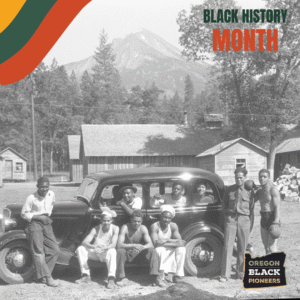
Oregon Black History: Oregon’s Black CCC
The Civilian Conservation Corps was a New Deal relief program that put 3.5 million men to work in conservation projects around the nation, between 1933-1942. The workers built dams, planted trees, and created many iconic state and national parks.
The CCC was segregated, but some Black recruits were sent from northern cities and the south to form integrated companies in the rural west. Oregon had at least two integrated CCC companies: 616, near Maupin (1933) and 1642, near Butte Falls (1934). This image comes from Butte Falls, northwest of Mt. McLoughlin.
When not at work in the forest, the CCC men participated in sports, music, journalism, and vocational courses. In 1935, the CCC was segregated nationwide, and all Black enrollees were recalled to serve in their home states.
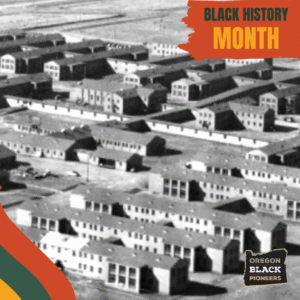
Oregon Black History: Camp White
Camp White was a military training facility in Jackson County from 1942-1945. Named for Gen. George White, the camp was located where the town of White City is today. 208 Black soldiers from Washington State’s Fort Lewis were part of the first group of soldiers sent to Camp White.
Medford, the nearest town to Camp White, had just 5 Black residents at the time. Newspapers reported that Medford businesses routinely denied service to the Black soldiers, fearing it would upset their white customers to have to sit and dine next to Black men.
Camp White’s commanding officer Gen. Charles Gearhart threatened local businesses that unless they served Black soldiers, no soldiers would come to town on their off days. In September 1942, the Medford chamber of commerce opened a recreation center for Black soldiers on Main Street.
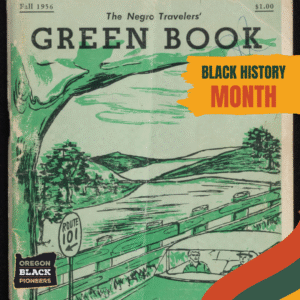
Oregon Black History: Green Book
The Negro Motorist Green Book was a nationwide annual guide book for Black travelers published from 1936-1966 (except during the WWII years). Each edition featured a state-by-state list of businesses which offered accommodations and services to Black Americans. This allowed motorists to plan their routes safely.
Because Oregon had so few Black residents and businesses compared to other states, its entries in the Green Book are limited. Oregon’s first appearance was in 1939, and featured just two businesses: Pendleton’s Flo Hotel and Portland’s Golden West Hotel.
From 1951-1956, the only Oregon businesses highlighted in the Green Book were the same few Portland hotels and restaurants. Hotels in Salem, Eugene, Bend, Astoria, Pendleton, Klamath Falls, and Waldport were included in the book after 1957.
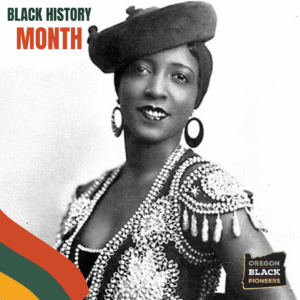
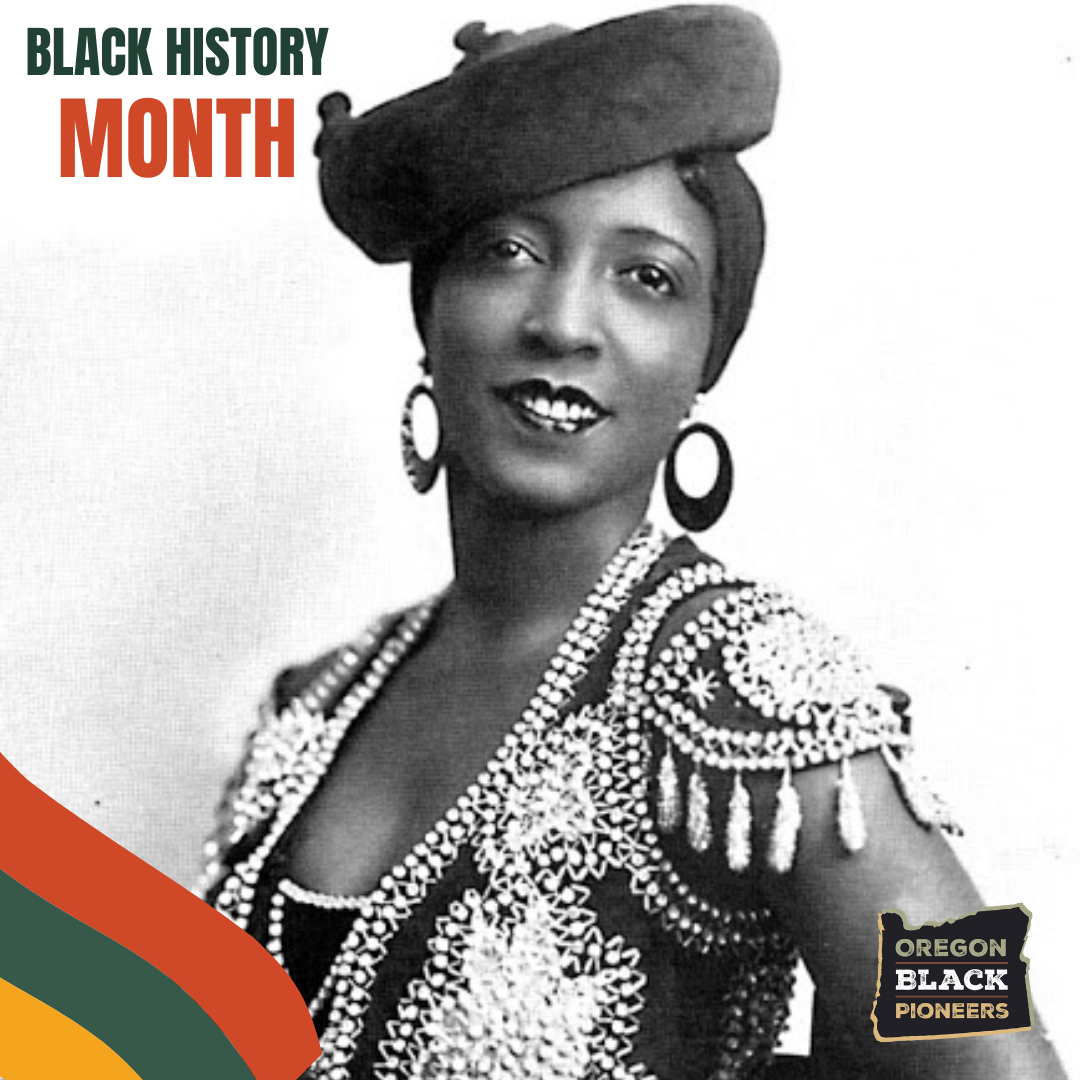
Oregon Black History: Paquita Zarate
Paquita Zarate, born Myrtle Dillard in 1908, was a dancer and singer. In 1925, she began performing across the east coast with a Black vaudeville troupe out of Baltimore. They took the show to Europe in 1929, where Myrtle began a successful solo career in Spain.
In Paris in 1938, Myrtle met a Mexican musician named Samuel Bonifacio Zarate. They began recording and touring as “Zarate and Paquita” and soon developed a relationship. They married in Seattle in 1944 then embarked on a West Coast tour.
In 1957, after years of frequent touring, the couple began a residency at a hotel in Depoe Bay. The next year they bought property on Highway 101 in Lincoln Beach, where they lived and operated a music studio and restaurant. Zarate and Paquita continued performing until Paquita’s death in 1968.
Oregon Black History: Independence Rock
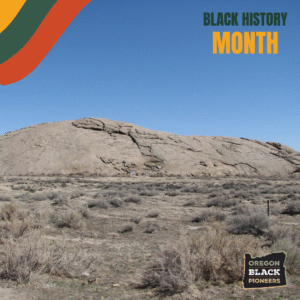
Independence Rock is a massive boulder in Wyoming that served as a landmark for Oregon Trail pioneers. Travelers gave it this name because they tried to reach the rock by Independence Day.
A modern historical marker on the rock reads: “In Memory of Anderson Deckard and Party Who camped here July 4, 1853”. That party included an enslaved Black woman named Amanda Gardner. Gardner was owned by Deckard’s wife, Lydia Corum Deckard. When they reached Albany, Oregon in 1853, Amanda was freed. She resided near them for many years, and outlived every other member of the Deckard overland party.
Oregon Black History: Black Baseball
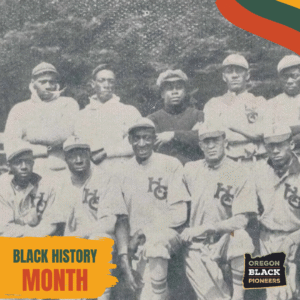
Oregon has a long history of Black baseball clubs. Most were semi-organized clubs among the workers of mines and sawmills. In the 1910s-1920s, communities like Maxville had Black and white teams that competed against each other and teams from other towns.
Oregon’s first professional Black team was Portland’s Hubbard Giants, named for the team’s owner Lou Hubbard. The club existed from 1913-1917, and played at McKenna Park. For a time, the team included pitcher Jimmy Claxton. In 1916, Claxton played two games for the Pacific Coast League’s Oakland Oaks; no Black player would play in an integrated pro game in the US again until Jackie Robinson in 1947.
Portland’s only “Negro Leagues” team was the Portland Rosebuds. The Rosebuds played their home games at the Vaughn Street Stadium. They existed only in 1946, as the West Coast Negro Baseball Association folded the next year.
Oregon Black History: Margaret Carter
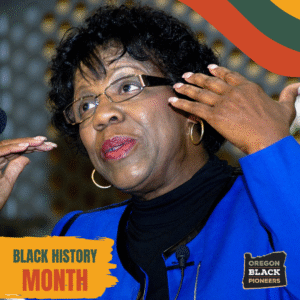
Margaret Carter came to Oregon in 1967 as a single mother from Louisiana. While working odd jobs, she enrolled at Portland State University and graduated with a bachelor’s degree in 1972. She followed this with a master’s degree in psychology from Oregon State University in 1973.
In 1983, Carter ran for a seat in the Oregon House of Representative representing Northeast Portland. She won, and became the first Black woman to be elected to the Oregon legislature. Carter served in the House until 1999, then successfully ran for a seat in the Oregon State Senate in 2001. Carter resigned from the Senate in 2009.
Carter remains a powerful leader in Portland politics and community spaces. In addition to her government service, Carter has served as president of the Urban League of Portland and an instructor at Portland Community College.
Oregon Black History: Grafton T. Brown
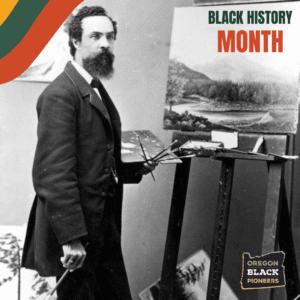
Grafton Tyler Brown was the first Black professional artist in the West. Brown was trained as a lithographer in Philadelphia, and came to San Francisco in the 1850s. He worked for the mapmaking firm Kuchel and Dresel, then bought the company in 1867 and renamed it G.T. Brown and Co.
Brown’s map work included images of Virginia City, NV and the San Francisco Bay. Around 1870 he was living in Victoria BC and created the label for the salmon cannery “J.S. Deas and Co.”, owned by Black Portlander John Deas. In the 1880s Brown began painting landscapes. He resided for years between Tacoma and Portland working on paintings of Mt. Rainier, Mt. Hood, and Mt. St. Helens.
In 1887, Brown left Oregon for Yellowstone National Park, where he sold paintings of the park’s canyons and geysers to tourists. In 1892 he moved permanently to St. Paul, MN to work as a draftsman for the Army Corps of Engineers.