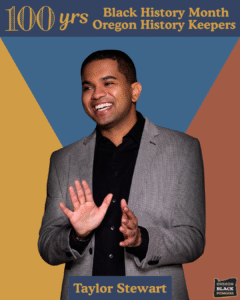
In honor of the 100th anniversary of Black History Month, we’re highlighting a century of Black history keepers here in Oregon. Without them, so many stories would be lost. We honor and appreciate their essential work this month, and all year round.
Oregon’s Black History Keepers: 1920s
Amanda Gardner Johnson was 19 when she was brought to Linn County, Oregon, as an enslaved person in 1853. She was soon granted her freedom and remained near Albany for the rest of her life. In the 1920s, Amanda recounted her memories of the Oregon Trail, emancipation, and seven decades of change in the Willamette Valley. This made her one of the few African Americans to recount their experiences of the pioneer era in their own words.
Oregon’s Black History Keepers: 1930s
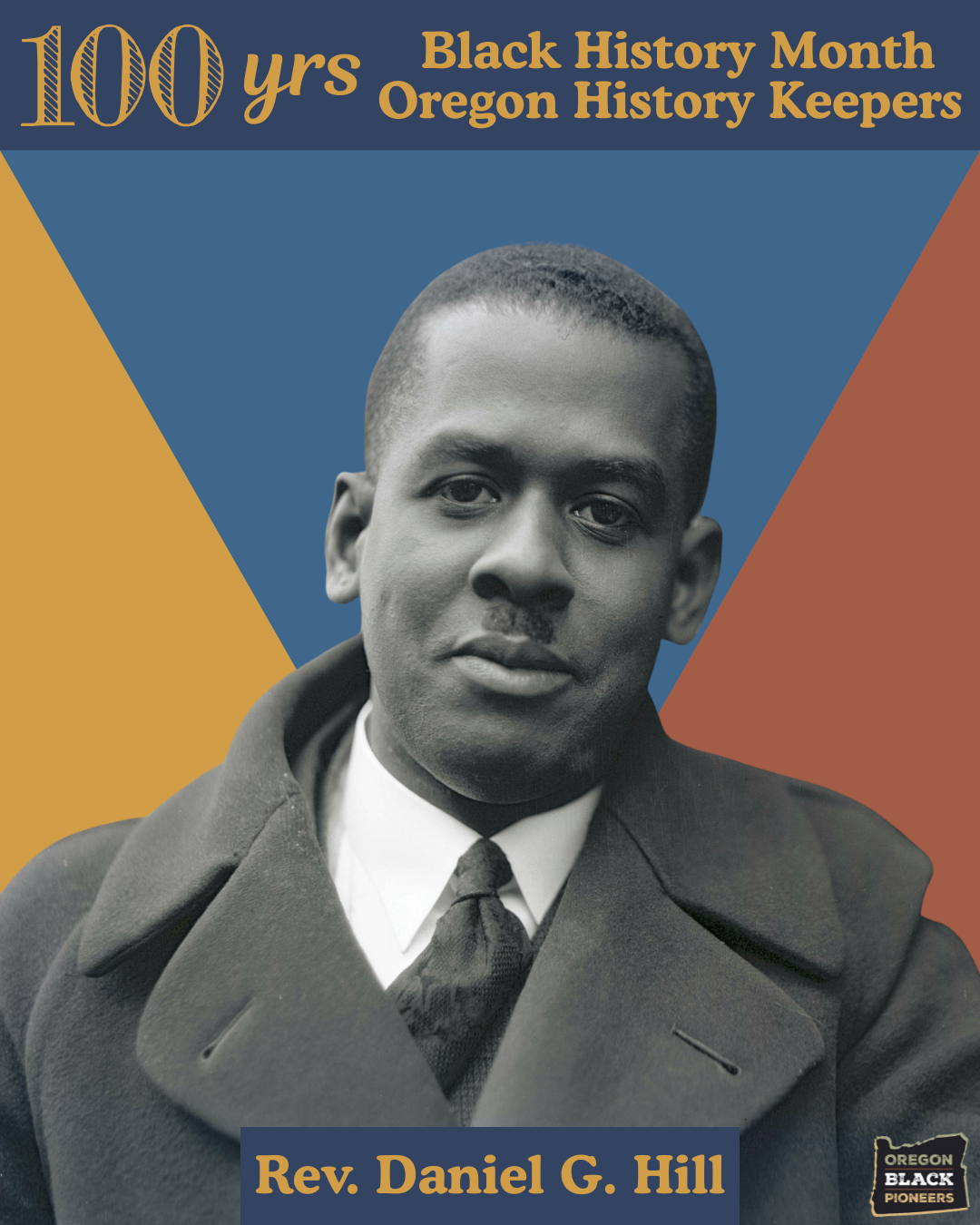
Reverend Daniel G. Hill, Jr. was born in Annapolis, Maryland, in 1896. After studying divinity in Pennsylvania and Colorado, Daniel became minister of Portland’s Bethel AME Church in 1928. In 1932, he earned a Master’s Degree from the University of Oregon, with a thesis called “The Negro in Oregon,” a survey of local Black history and community. Daniel later taught at the School of Religion at Howard University from 1945 to 1964.
Oregon’s Black History Keepers: 1940s
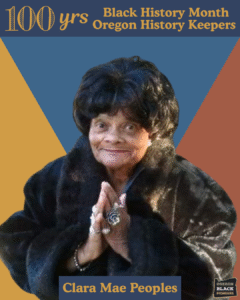
During WWII, African Americans from across the country made their way to Vanport to work in the shipyards. One of them was Clara Mae Peoples of Muskogee, Oklahoma. Peoples was surprised to find that many of her coworkers had never heard of Juneteenth, a holiday which she grew up celebrating. So, in 1945, Clara Mae convinced her boss to allow the Black shipyard workers to gather on their lunch break for Oregon’s first-ever Juneteenth celebration.
Oregon’s Black History Keepers: 1950s
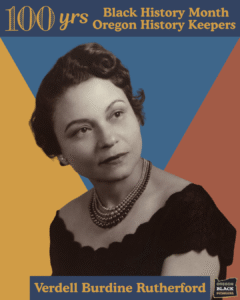
Verdell Burdine Rutherford moved with her family to Portland in the 1920s. She married Otto Rutherford, and for decades they fought for civil rights as leaders with the NAACP, Urban League, and other groups. A secretary by trade, Verdell meticulously organized and saved family photos, club documents, and newspapers. Her collection is today housed at PSU, and is a preserved legacy of mid 20th century Black community life.
Oregon’s Black History Keepers: 1960s
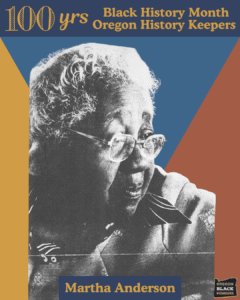
Martha Anderson (nee Adams) was born in 1910 and spent the first 30 years of her life in Colorado, Idaho, and Nevada. In 1940, she married Walter Anderson and moved to his ranch in Harney County, Oregon. When Walter’s health worsened in 1953, the couple moved to Portland. They purchased the former Hotel Medley and ran it until it was demolished for the Memorial Coliseum in 1959. For the next decade, Martha, now a widow, researched and compiled the stories of other early Black settlers of the west. This culminated in “Black Pioneers of the Northwest, 1800-1918,” one of the first books on PNW Black history.
Oregon’s Black History Keepers: 1970s
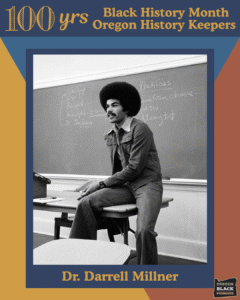
Dr. Darrell Millner came to Eugene in 1970 to attend the University of Oregon. After earning his doctorate, Darrell began teaching History and Afro-American Literature at Portland State University. He chaired the school’s Black Studies department from 1984 to 1995, and later served as a Board member of Oregon Black Pioneers. As an educator and mentor, Dr. Millner has introduced generations of people to local and national Black history.
Oregon’s Black History Keepers: 1980s
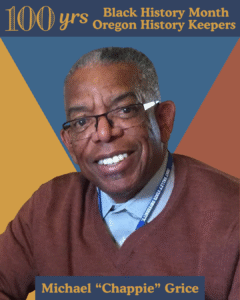
Michael “Chappie” Grice was born in Portland in 1948. He followed in his father’s footsteps by working for the railroads as a young man. Chappie then had a 50-year career as a school teacher. Outside of the classroom, Chappie helped preserve local Black history through community groups; he co-founded the World Arts Foundation and Friends of the Golden West Hotel, and led the Alberta Street Project, an influential preservation project.
Oregon’s Black History Keepers: 1990s
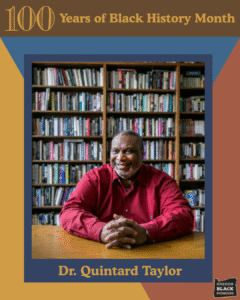
Tennessee-born Quintard Taylor began his academic teaching career at Washington State University in the 1970s, concentrating on the early Black histories of Oregon and Washington. In 1999, Quintard joined the faculty of the University of Oregon, teaching classes on Black history in the American West. During that time, Dr. Taylor published his landmark book In Search of a Racial Frontier. He left U of O for the University of Washington in 1999, where he taught until 2018.
Oregon’s Black History Keepers: 2000s
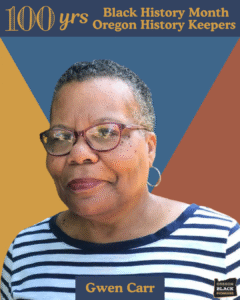
After a career at SAIF, Salem resident Gwen Carr joined the Board of Directors of Oregon Black Pioneers in 2004. Alongside Willie Richardson and Kimberly Moreland, Gwen spent years researching and presenting stories of Oregon’s Black history through exhibits, talks, and historical markers. Gwen was the project manager for the 2007 book Perseverance, documenting the Black history of Marion and Polk counties. Today, she is the Director of the Bush House Museum in Salem.
Oregon’s Black History Keepers: 2010s
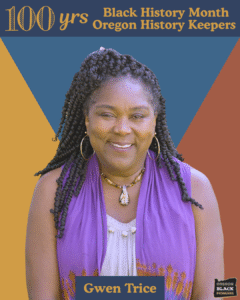
In the early 2000s, Gwen Trice of LaGrande, Oregon, began an intensive research project to uncover the forgotten history of the Maxville logging community and its diverse workforce, which included more than 50 African American loggers. Gwen founded the Maxville Heritage Interpretive Center (MHIC) in 2008 to preserve this unique Eastern Oregon story. Under Gwen’s leadership, MHIC purchased the original Maxville town-site and timberland, preserved and relocated the last original company building, and are developing a communal education and research campus on site.
Oregon’s Black History Keepers: 2020s
Born and raised in Portland, Taylor Stewart launched the Oregon Remembrance Project to pursue truth and reconciliation around the 1902 lynching of Alonzo Tucker in Coos Bay, Oregon. Between 2018-2021, Taylor and Coos Bay community members held a series of acts of remembrance for Mr. Tucker, which culminated in the installation of a historical marker outside of the Coos History Museum in 2021. Today, ORP helps communities around the state confront Oregon’s history of lynching, sundown towns, Black Exclusionary Laws, and KKK activity.
Black History Month 2023 Oregon Black History Spotlight: George P. Riley George Riley was a Boston-born businessman and civil rights leader. He came to the...
Black history is everywhere in Oregon! This month we’re sharing some of the things we think everyone should know about Oregon’s Black history. It’s Oregon...
It’s Black History Month! We’ve got good things going on: History Spotlights featuring some of Oregon’s noted Black history makers, speaking events, and a takeover...
In honor of the 100th anniversary of Black History Month, we’re highlighting a century of Black history keepers here in Oregon. Without them, so many...