Black history is everywhere in Oregon! This month we’re sharing some of the things we think everyone should know about Oregon’s Black history. It’s Oregon Black History: 101!
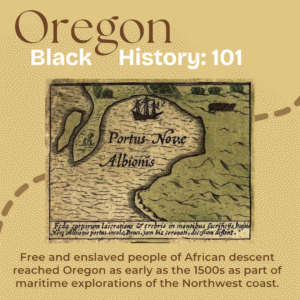
Did you know people of African descent were in Oregon as early as 1579? Free and enslaved Black people arrived in Oregon as part of maritime explorations of the Northwest coast.
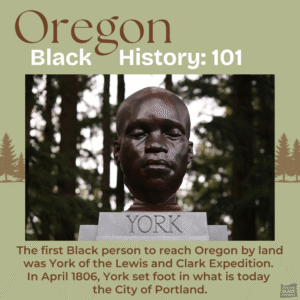
Do you know the name of the first known Black person to reach Oregon by land? In April 1806, York of the Lewis and Clark Expedition set foot in what is today the City of Portland.
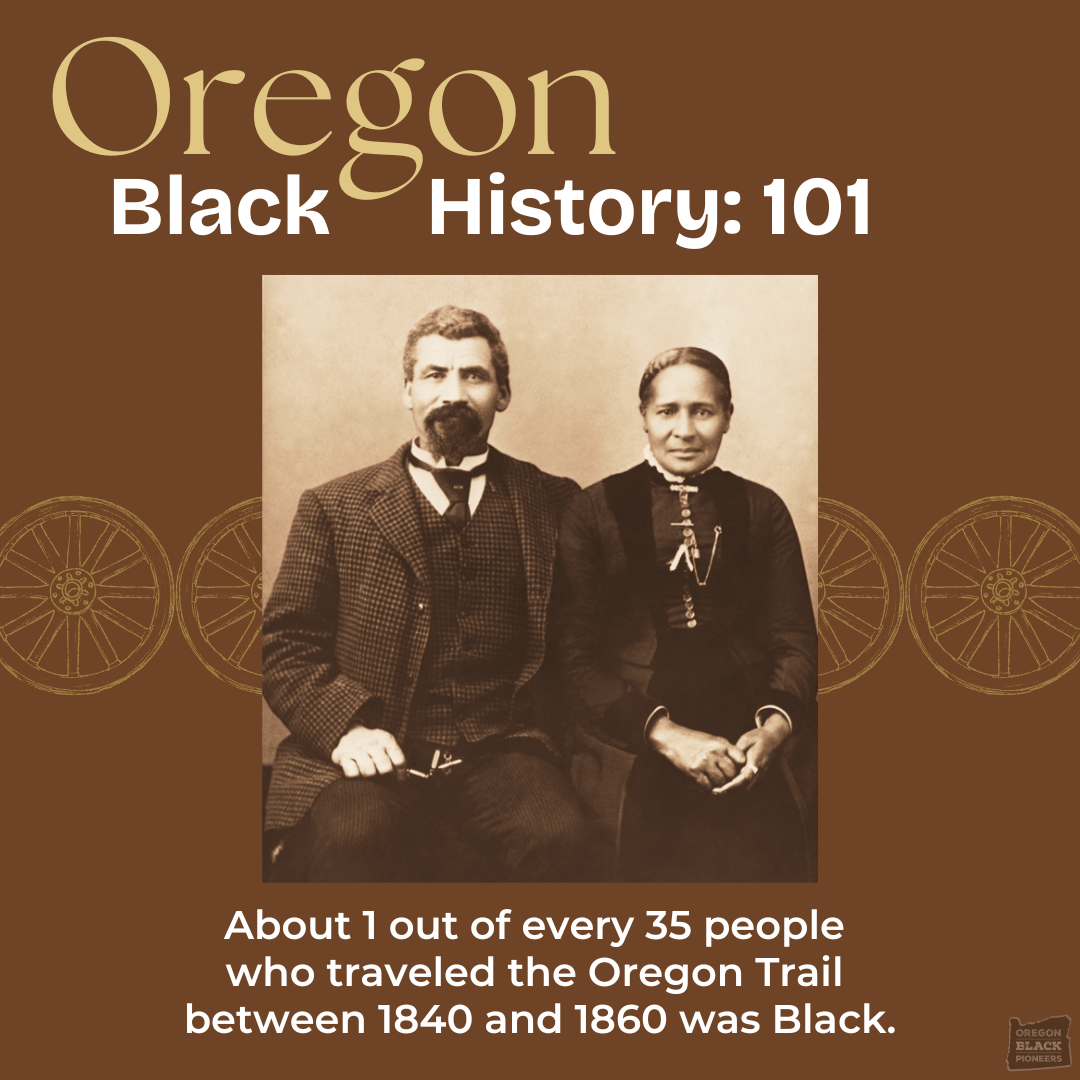
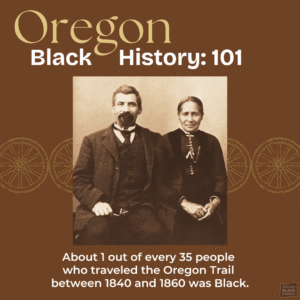 Who do you think of when you think “Oregon Trail?” Did you know that about 1 out of every 35 people who traveled the Oregon Trail between 1840 and 1860 was Black?
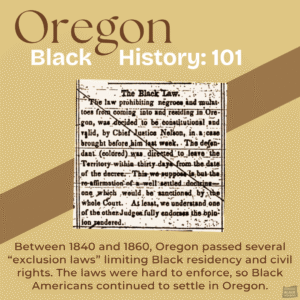 Did you know that Oregon tried really hard to keep people of African descent out? The state passed several “exclusion laws” limiting Black residency and civil rights. The laws were hard to enforce though, so Black Americans continued to settle in Oregon in spite of these racist laws.
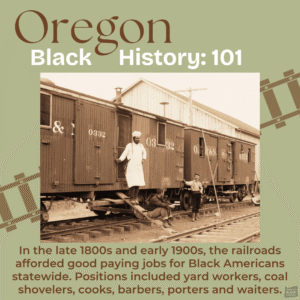 Many African Americans made their way to Oregon in the late 1800s and early 1900s for good paying jobs on the railroad. Positions for Black Americans included yard workers, coal shovelers, cooks, barbers, porters and waiters.
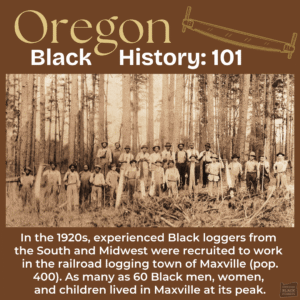 Do you know Maxville in Eastern Oregon? In the 1920s, experienced African American loggers were recruited to work in this railroad logging town. The diverse population grew to a whopping 400, with 60 Black men, women, and children living there at its peak.
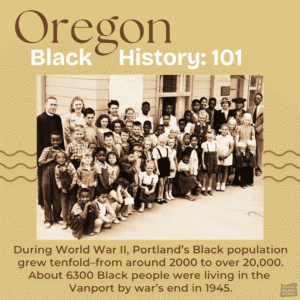 Before it was destroyed in a 1948 flood, Vanport was the second largest city in Oregon, and one of the most diverse. And in Portland, the Black population grew tenfold–from around 2000 to over 20,000–during the World War II years.
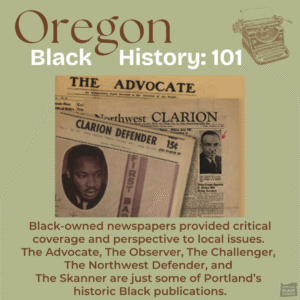 The first of Oregon’s Black-owned newspapers, The New Age, started publishing in 1896. These newspapers provided critical coverage and perspective to local issues. The Advocate, The Challenger, The Northwest Defender, and The Observer and The Skanner (both still publishing) are just some of Portland’s historic Black publications.
 Every Black community in the state has had churches, with some starting as early as the 1860s! The church has been a vital place for worship, organizing, and social life. Even places like Baker City, Pendleton, and Klamath Falls had Black churches before the 1950s.
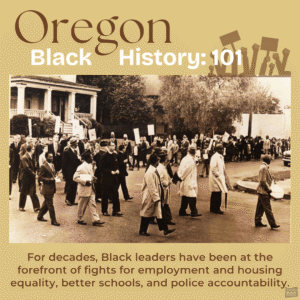 For decades, Black leaders have been at the forefront of fights for employment and housing equality, better schools, and police accountability. All over the state you can find the fruits of our action and activism.
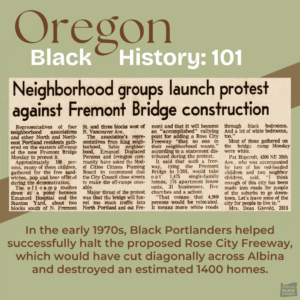 Portland’s Albina neighborhood was subjected to segregation, disinvestment, and displacement. In the early 1970s, Black residents and others came together to protest the proposed Rose City Freeway, which would have cut diagonally across Albina. Their efforts prevented the destruction of approximately 1400 homes.
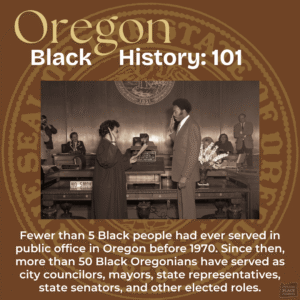 Since 1970 more than 50 Black Oregonians have served as city councilors, mayors, state representatives, state senators, and other elected roles. Before that, there had only been a handful of Black people serving in elected and appointed office roles.
Black history is everywhere in Oregon!